Allergen warning: contains peanuts. Peanut is one of the fourteen allergens that must be declared under European law, and the one most often associated with severe reactions. This product is not suitable for anyone with a peanut allergy.
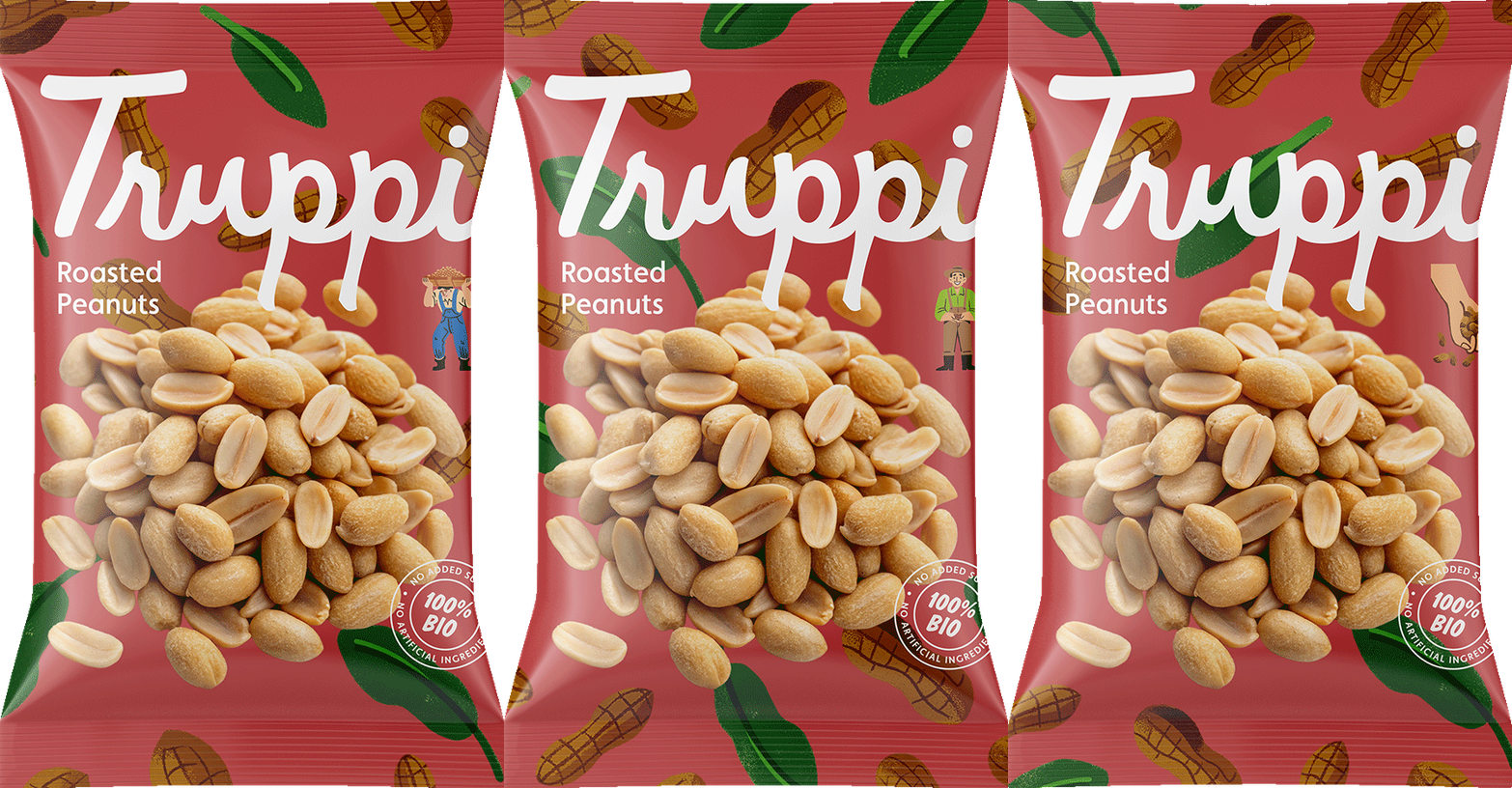
Organic peanuts, roasted. Nothing else.
Peanuts are not nuts
A genuine and occasionally useful piece of pedantry: peanuts are legumes, in the same family as peas, beans and lentils, and they grow underground rather than on a tree. Almonds, walnuts and hazelnuts are tree nuts, botanically unrelated.
It matters medically. A peanut allergy and a tree-nut allergy are different things, and having one does not automatically mean having the other — though many people are advised to avoid both, and cross-contact in processing is common. If you are buying for someone else, ask which they react to.
What roasting does
A raw peanut tastes green and beany — the legume it is. Roasting drives the Maillard reaction, in which sugars and amino acids rearrange into hundreds of new aromatic compounds, and that is where the entire flavour we think of as "peanut" comes from. It is not an intensification of the raw flavour; it is a different flavour created by heat.
These are roasted and unsalted, which makes them more useful than salted ones: you can salt them and you cannot unsalt them.
Using them
As a snack. Blitzed into peanut butter — two minutes in a food processor and nothing else needed, since peanuts release enough of their own oil. Chopped over noodles, a Thai salad or satay. In a trail mix with dried banana or dark chocolate. Crushed into a crust for chicken or fish.
Storage
Peanuts are high in fat and go rancid rather than mouldy. Airtight, cool and dark, or in the freezer if you buy a lot. If they taste sharp or like old paint, they have oxidised — trust your nose over the date on the packet.
Note
Whole peanuts are a choking hazard for children under five and should be given ground or as smooth butter.



 treatfuls
 treatfuls
 treatfuls


