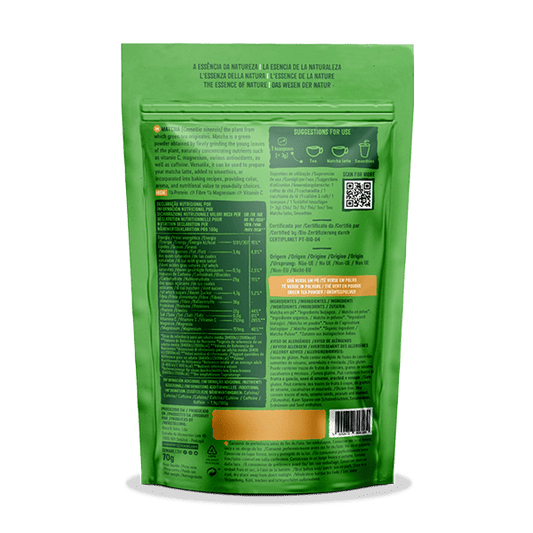
100% organic ceremonial grade matcha from selected plantations in Kyoto. Nothing added — no dyes, preservatives or sugar. 30 g.
Three claims you will not find here
Matcha is routinely sold as "a powerful antioxidant food that provides energy, accelerates metabolism and controls the levels of blood sugar". None of that appears here, and it is worth explaining why rather than simply leaving it out.
"Antioxidant" is not an authorised health claim in the EU. The European Commission rejected general antioxidant claims for foods, because nobody could demonstrate what the supposed benefit actually was in a person.
"Accelerates metabolism" is a health claim and it is not authorised for green tea. Applications were made and rejected.
"Controls the levels of blood sugar" is the serious one. That is effectively a medical claim, and a food may not make it — not least because someone managing diabetes could reasonably read it as meaning something it does not.
"Provides energy" has a plainer answer that does not need a claim: it contains caffeine, and quite a lot of it.
What ceremonial grade actually means — and does not
An honest note: "ceremonial grade" is not a regulated or certified term. There is no body that awards it and no threshold to meet. Any producer may use the words.
What it conventionally describes is real, though: the youngest leaves of the first spring harvest, shade-grown, stone-ground, with stems and veins removed. That produces a bright green, fine, sweet powder intended to be whisked with water and drunk alone. Culinary grade is later-harvest leaf — duller, more bitter, coarser — and made for lattes and baking where sugar and milk cover it.
Judge it by colour and smell rather than by the words. Good matcha is vivid, almost fluorescent green and smells sweet and marine. Dull, yellowish or khaki powder is either older leaf, oxidised, or badly stored — and it will taste bitter and hay-like whatever the label says.
Why it is so green: the shading
This is the interesting part and it explains everything else. For about three weeks before harvest, the tea plants are covered.
Deprived of light, the plant produces more chlorophyll — hence the colour — and more L-theanine, an amino acid found almost exclusively in tea, while producing fewer bitter catechins. That is why matcha is sweeter, more savoury and more umami than sun-grown green tea, and why it is so vividly coloured.
Kyoto — particularly Uji, just south of the city — is where this method was developed, and it remains the reference.
Two honest notes
Caffeine. You drink the whole leaf, so matcha carries far more caffeine than brewed green tea — often comparable to a weak coffee. EFSA advises staying under 200 mg a day in total during pregnancy and breastfeeding.
Lead. Tea plants take up small amounts of lead from soil and air. With brewed tea most stays in the discarded leaf; with matcha you consume it. Levels in tested products are low and occasional use is not a concern — it is a reason to buy certified matcha from a known origin, which this is, and not to drink several bowls daily.




 Matcha & CO
 Piecely Puzzles
 Matcha & CO
 Iswari


