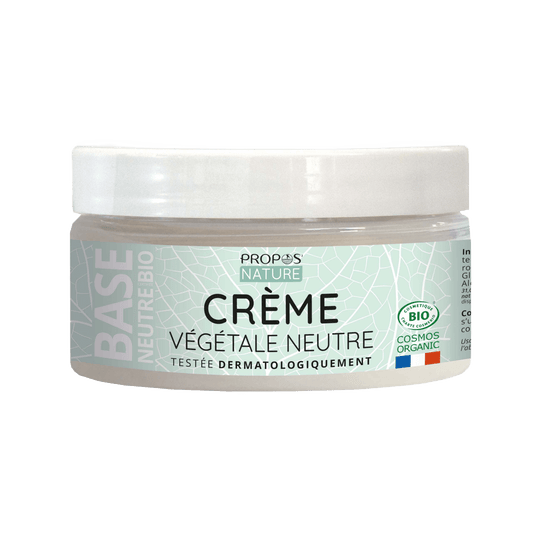
An organic tinted face cream built on roucou and carrot macerate, with lemon hydrosol and hyaluronic acid. Made in France, over 99.45% natural ingredients. It gives skin a warm, sunned-looking tone the moment you put it on.
The most important thing on this page: it is a tint, and it offers no sun protection
This cream is often sold on the promise that you will "achieve a naturally tanned complexion". You will not read that here, because it is the kind of wording that gets people burnt.
What this cream does is deposit warm colour on the surface of your skin. It is a cosmetic tint, no different in principle from a tinted moisturiser. It does not stimulate melanin, it does not tan you, and — this is the part that matters — it contains no SPF whatsoever.
A face that looks lightly sunned but has no sun protection on it is a genuinely risky combination, because the visual cue that normally tells you "I have had some sun" is now arriving for free. Use your normal sunscreen, and put this on over it.
Where the colour comes from
Roucou is annatto — the seed of Bixa orellana, a South American shrub. Its seeds are coated in bixin and norbixin, carotenoids so strongly coloured that annatto is one of the world's oldest and most widely used natural dyes: it is what makes Red Leicester orange and Amazonian body paint red. Carrot macerate brings beta-carotene, from the same family of pigments.
Two practical consequences of using real pigment rather than a synthetic tint:
-
It can transfer. Onto shirt collars, scarves, pillowcases and light-coloured towels. Let it settle for a few minutes before dressing, and do not go to bed in it.
-
The shade is what it is. Carotenoid tints are warm and orange-toned by nature. On very fair or very cool-toned skin the effect can read as yellow rather than sunned — try a little on your jaw before committing to your whole face.
Hyaluronic acid — what it actually does
Hyaluronic acid is routinely sold as "a powerful anti-aging ingredient". It is not, and it is worth explaining what it actually is, because it is genuinely useful once you understand it.
Hyaluronic acid is a humectant — a molecule that holds water. Applied to skin it draws water into the outer layer and holds it there, which plumps the surface and makes fine lines look softer while it is hydrated. That is a real, visible effect and a good reason to like it. It is not a change to the structure of the skin, and it does not undo ageing.
It also has a quirk worth knowing: in very dry air, a humectant with nothing over it can pull moisture out of the skin rather than into it. This cream contains its own oils and butters, so it is fine on its own — but if you use a separate hyaluronic serum, always seal it with a cream.
What about the lemon — is it phototoxic?
A fair question, and the answer is reassuring. Lemon essential oil is phototoxic, because cold-pressing carries furocoumarins from the peel into the oil. A hydrosol is the water left after distillation and contains essentially none of them. There is no sun restriction from the lemon hydrosol in this cream — the sun issue is the absence of SPF, discussed above.
How to use it
- On clean skin, after your serum and after sunscreen, morning only.
- Start with less than you think — build the colour rather than correcting it.
- Blend down to the jaw and slightly onto the neck so there is no line.
- Wash your hands straight afterwards; annatto stains fingertips and nails.
-
Patch test on the inner arm before first use, and keep it out of your eyes.
Certified organic, made in France, not tested on animals.




 Natura Siberica
 Weleda
 Propos'Nature


