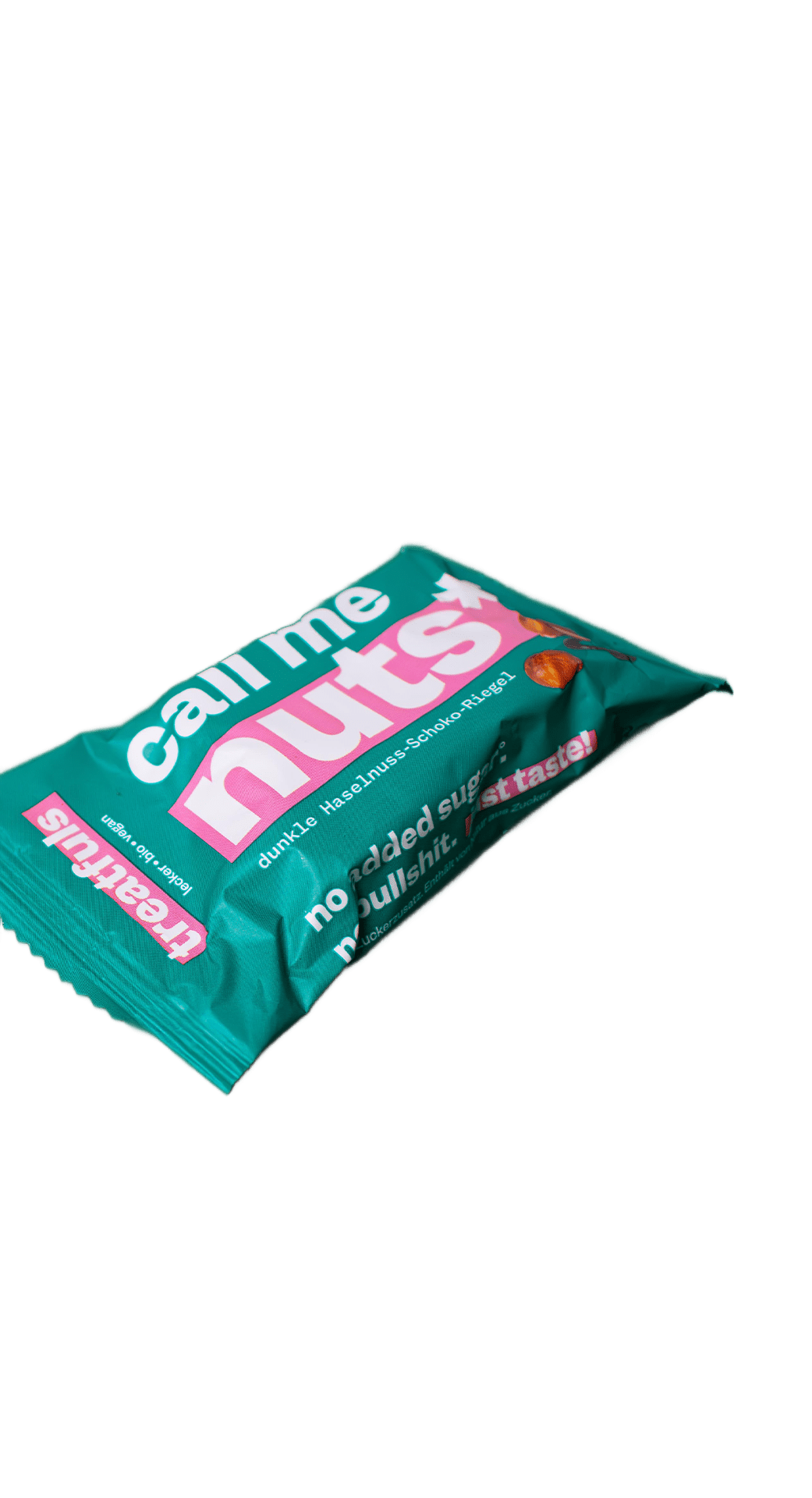
The most straightforwardly grown-up bar in the range: roasted hazelnuts and dark chocolate over a date base, with nothing pale or creamy to soften the edges. If the white-coated bars in the treatfuls line read as dessert, this one reads as chocolate.
Hazelnut and dark chocolate. There is a reason this pairing appears in every confectionery tradition in Europe. Roasted hazelnut and roasted cocoa are chemically close cousins — both develop their aroma through the Maillard reaction, and the pyrazines that come out of a roasting drum smell recognisably similar in each. Put them together and they do not compete; they compound. The date base adds the sweetness that dark chocolate on its own does not have, which is what makes the bar work without any added sugar.
Dairy-free by design. The coating is dark chocolate built on cocoa butter and cocoa mass, with no milk solids. Good dark chocolate is naturally vegan; what usually catches people out is milk fat added for mouthfeel, or shared production lines. This is formulated vegan from the start.
Sweetened by fruit alone. No sugar, syrup, honey or sweetener added — the dates do the work. Which is worth saying plainly: it is not a low-sugar bar, because dates are naturally sugar-rich. It is a bar where the sugar comes packaged inside whole fruit, with the fibre still attached.
How to eat it. This is the espresso bar. It is also the one to hand someone who says they do not really like “healthy” snacks, because it does not taste like a compromise.
Contains hazelnuts. Vegan, organic, gluten-free, no palm oil, no soy, no lactose. Available at Só Verde, an organic concept store in Foz, Porto.




 treatfuls
 treatfuls
 treatfuls
 treatfuls


