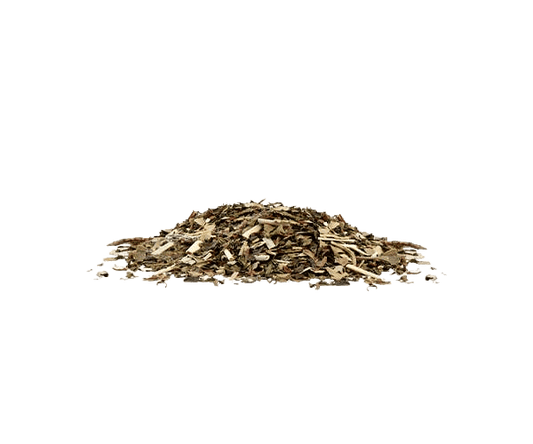
An organic caffeine-free infusion of lemongrass and verbena from POP TEE — clean, citrus-led and about as refreshing as a hot drink gets.
Two lemon plants that are not remotely related. Lemongrass is Cymbopogon citratus, a tall tropical grass from South and Southeast Asia, where the tough stalks are bruised and used in curries, soups and broths. Lemon verbena is Aloysia citrodora, a woody shrub from Argentina and Chile brought to Europe in the 1780s. A grass and a shrub, from opposite sides of the world — and they smell alike for one reason: both are dominated by citral, the aldehyde that also gives lemon peel its character. Convergent chemistry, not kinship.
A useful warning about the word “verbena”. It is genuinely ambiguous, and mislabelling is common. In French, verveine almost always means lemon verbena — the fragrant lemony one drunk after dinner. But Verbena officinalis, called vervain in English, is a different plant entirely: a bitter European herb with no lemon character at all, used traditionally for quite different purposes. If a “verbena” tea tastes bitter and herbal rather than lemony, you have the other plant. This blend is the lemony one.
Why it works so well as a blend. Lemongrass is sharp, grassy and a little coarse; lemon verbena is finer, sweeter and more perfumed. Together they cover a broader range of the same citrus register than either does alone — lemongrass supplies the body, verbena the top note.
The one thing to do. Cover the cup while it steeps. Citral is volatile, and in an uncovered cup a substantial proportion of the flavour you paid for goes into the room instead of into the drink. It is the cheapest improvement available to anyone drinking herbal tea.
Caffeine-free, and outstanding iced. There is no tannin here, so it cannot turn bitter — a longer steep simply makes it stronger.
Available at Só Verde, an organic concept store in Foz, Porto.







 POP TEE
 POP TEE
 POP TEE


