Allergen warning: contains peanuts. Peanut is one of the fourteen allergens that must be declared under European law, and the one most often associated with severe reactions. Not suitable for anyone with a peanut allergy.
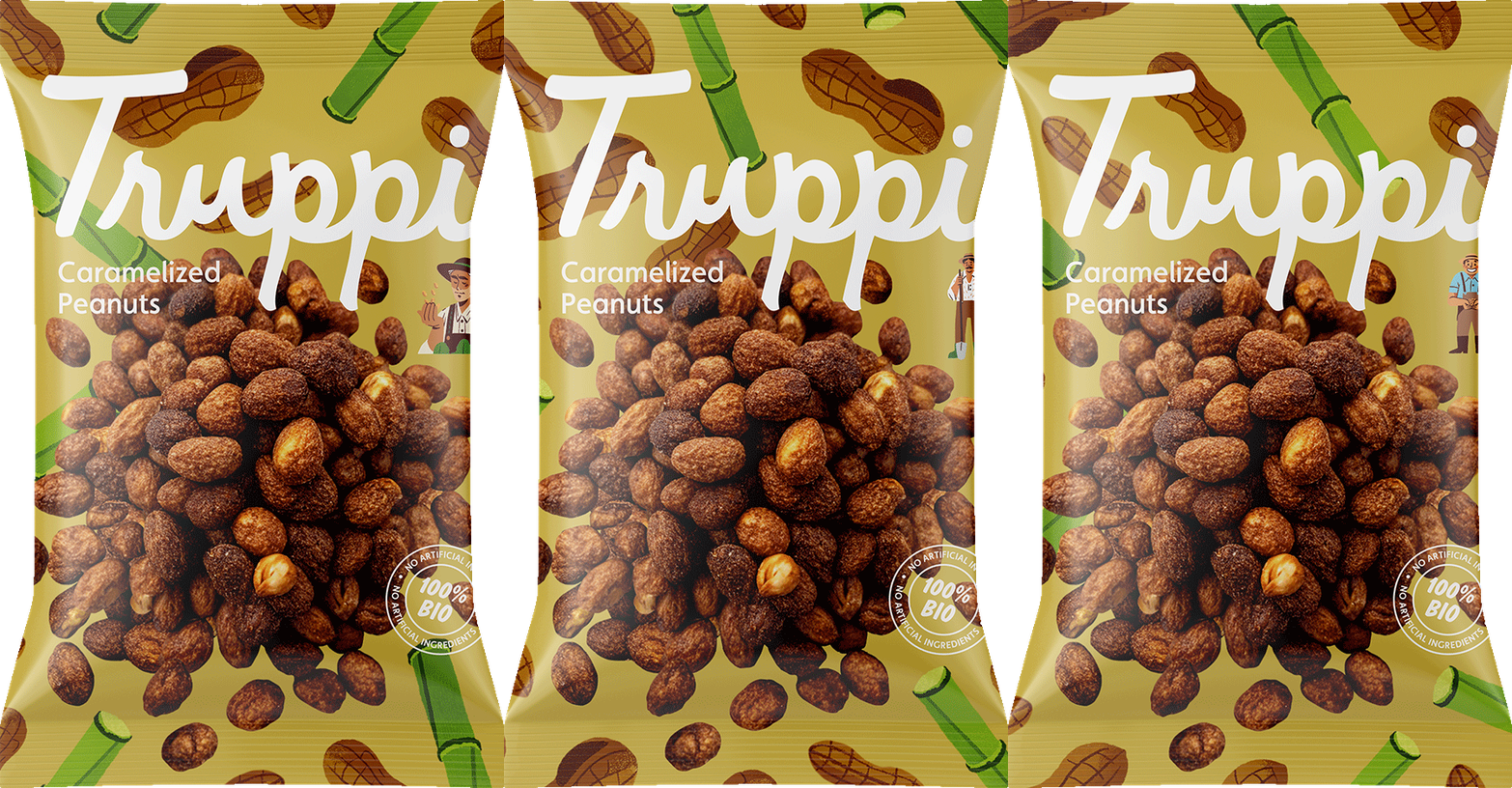
Organic peanuts caramelised in sugar — the thin, crackling, glassy coating that turns a plain roasted peanut into something considerably harder to put down.
What caramelising actually does
Two reactions happening at once, which is why the result is more interesting than simply sweet. Sugar heated past about 160 °C caramelises — it breaks apart and recombines into hundreds of compounds that taste bitter, nutty and toasted as well as sweet. At the same time the peanut's own proteins and sugars go through the Maillard reaction. The two together are why a good caramelised peanut has a faintly burnt, savoury depth rather than tasting like a sweet.
The coating is also what makes them keep well. A hard sugar shell excludes air, which is exactly what a high-fat nut needs.
Serving them
Out of the bag, mostly, and they are dangerously easy to eat that way. Also: scattered over vanilla or coffee ice cream; roughly chopped over a chocolate cake or a caramel tart; in a cheese course beside a blue; crushed into a salad with bitter leaves; or put out with a glass of something at the end of a meal.
Keeping them crisp
Caramel is hygroscopic — it draws moisture out of the air, and a caramelised nut left open goes sticky and then soft within a day or two in humid weather. Close the bag properly or decant into a jar, and keep them somewhere dry. Not the fridge, which is humid.
If they do soften, five minutes on a tray in a low oven and a complete cooling will bring the crack back.
Note
Whole peanuts are a choking hazard for children under five, and a hard caramel coating makes them harder still to chew. Not suitable for very young children.



 treatfuls
 treatfuls
 treatfuls


