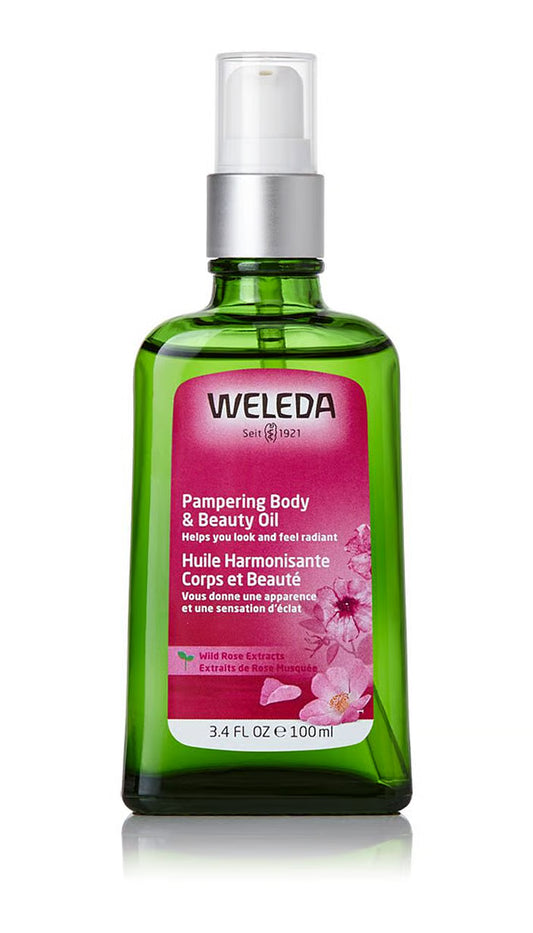
A 100 ml body oil from Weleda, built around pomegranate seed oil — a genuinely unusual botanical, and a format that a lot of people use incorrectly.
First, the thing that will make it work twice as well. A body oil contains no water. It is an occlusive, not a hydrator: it works by forming a film that slows evaporation from the skin, so it needs water underneath it to hold in. Rubbed onto dry skin, it makes the surface glossy and does very little else. Applied to skin still damp from the shower, it traps the water that is already there — which is the entire point. Do not dry off properly first. Pat, do not rub, then apply.
Pomegranate seed oil is a genuine oddity. Roughly 70 to 80% of it is punicic acid, a conjugated trienoic fatty acid that is essentially unknown elsewhere in the plant kingdom in such quantities. Conjugated fatty acids have a different chemistry from ordinary polyunsaturates — their double bonds sit next to one another rather than separated — and they behave as antioxidants in ways ordinary linoleic acid does not. It is one of the few plant oils in cosmetics whose botanical claim to fame is chemically real rather than marketing.
And an honest limit. “Regenerating” is a cosmetic word, not a medical one. What this oil does is improve the condition and appearance of skin, slow water loss, and feel very good. What it does not do is regenerate tissue, remove scars or reverse ageing. The pressing of pomegranate seeds is remarkable; the oil is still a moisturiser.
Why an oil rather than a lotion. Oils spread further, contain no preservatives or emulsifiers, feel more luxurious, and are excellent after a bath or for massage. Lotions absorb faster and do not mark clothes. If you want something to put on and dress immediately, use the Wild Rose lotion; if you want ten quiet minutes after a bath, use this.
Weleda, Switzerland, since 1921. Available at Só Verde, an organic concept store in Foz, Porto.




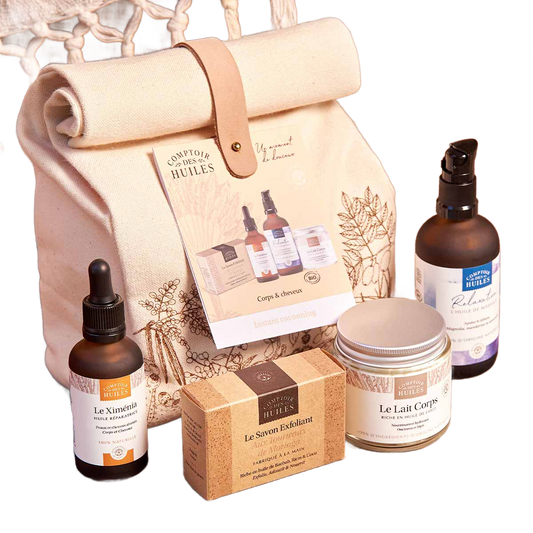


 COMPTOIR DES HUILES
 COMPTOIR DES HUILES


